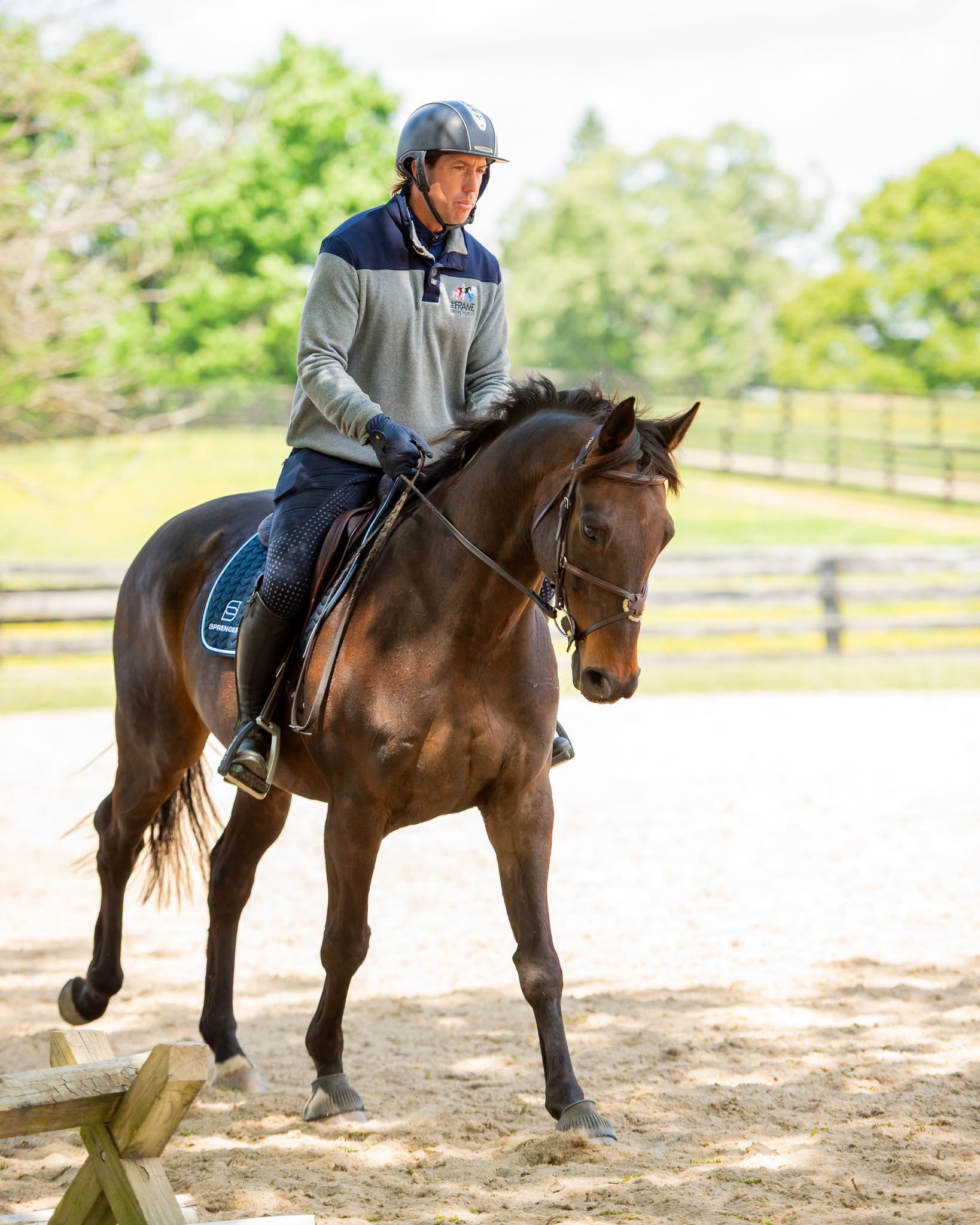
We introduce new concepts in environments where the horse feels confident, and we apply that same philosophy to the equipment we choose.
When a horse first wears a bridle, our goal isn’t to create more signals—it’s to keep things as simple and comfortable as possible. That’s why we typically start in a straight bar rubber bit, preferring a D-ring or eggbutt cheekpiece. Our go-to choices are the Herm Sprenger North America, LP NATHE Flexible Mullen Mouth, the Rubber Mullen Mouth, or the Duo. These bits offer a quiet, consistent feel while the horse is learning to accept the contact and understand the basics of steering and stopping.
As the horse gains confidence, some will tell us they prefer a different feel. If that’s the case, we’ll transition into a single-jointed Herm Sprenger bit, either the Hard Carbon or the NATHE Single Jointed, depending on the individual horse. We stay in these simpler bits until the horse has a solid understanding of the aids and is comfortable carrying the bridle.
Only then do we move into a double-jointed bit or begin exploring more specialized options. By that point, the horse understands its job, making it much easier to choose a bit based on the discipline it’s headed toward rather than using equipment to solve training questions.
Every horse is different, but our philosophy stays the same: keep the horse comfortable, keep the communication clear, and only make changes when the horse is ready, not because the calendar says so.
Want to try our favorite bits from Herm Sprenger? Use our code FRAME10 for a discount at checkout.